
Road Freight
Road Freight is the most commonly used mode of transportation within Europe. A truck delivers door-to-door, without transshipment and with flexible scheduling. But as soon as your cargo crosses an EU external border or travels under customs supervision, additional formalities come into play. A missing document can cause delays at the border and sometimes result in fines. We handle the customs clearance for your road transport: declarations, transit documents, and advice, from the Netherlands and Belgium.
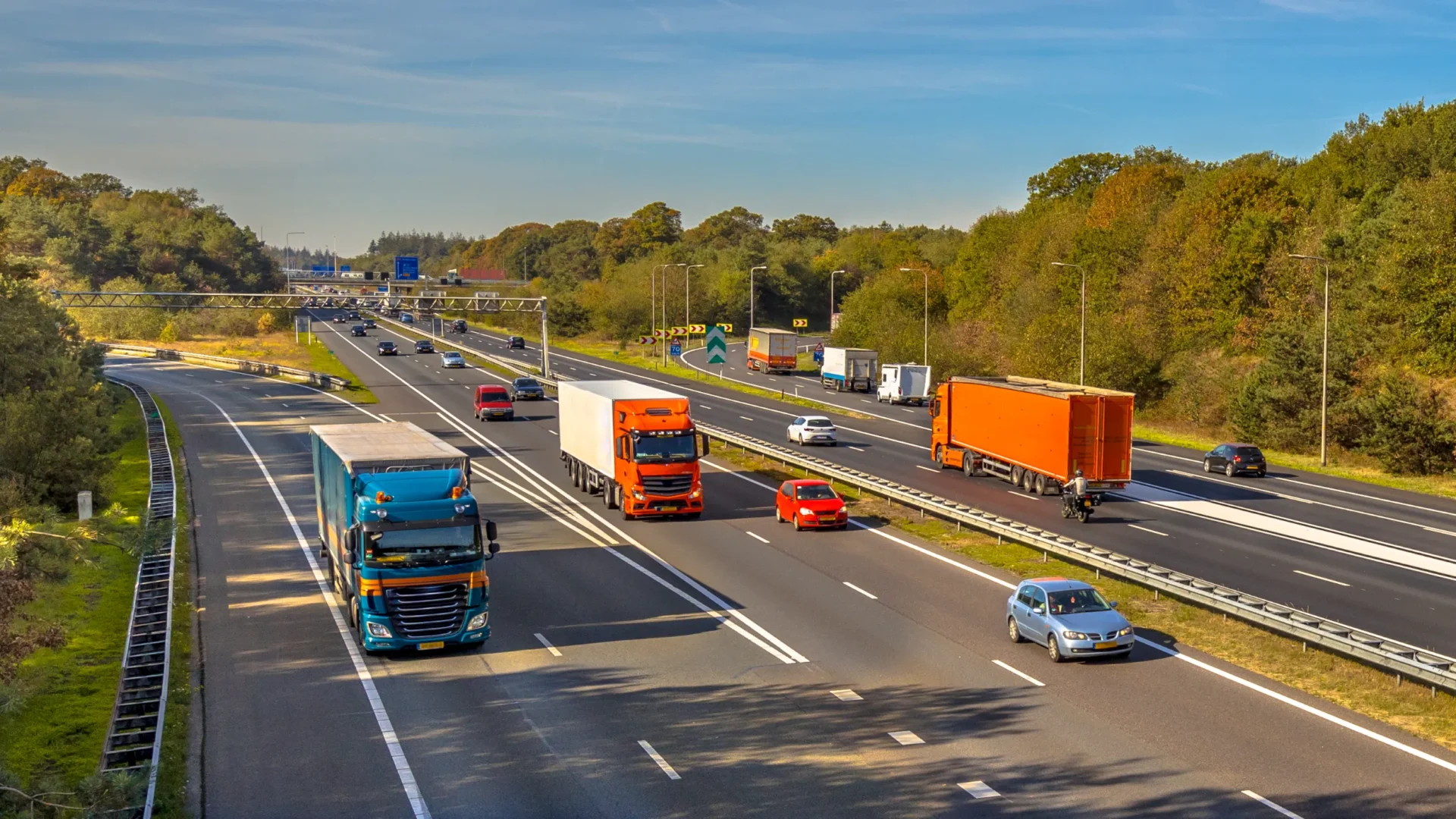
What is road freight?
Road freight, also known as road transport Also known as road transport, it refers to the transport of goods by truck. Within the EU, EU goods move freely, without customs formalities. This changes when goods are transported to or from countries outside the EU, such as the United Kingdom, Switzerland, or Norway. In those cases, an export declaration, import declaration, or transit document is required. You can read more background information about this mode of transport in our knowledge base article on road transport.
Types of Road Transport
The best type of ground transportation depends on the volume of your shipment:
| Form | Description | Typical deployment |
|---|---|---|
| FTL (Full Truck Load) | A full truckload for a single shipment | Large volumes, immediate delivery |
| LTL (Less Than Truckload) | Partial load, shared truck | A few pallets |
| Consolidated Shipping | Combined multiple shipments | Small, regular shipments |
For smaller volumes, groupage transport usually the most cost-effective option: you only pay for the space you use. Keep in mind that consolidating and sorting take extra time.
Customs Documents for Road Transport
International road transport always involves a CMR waybill, the transport document based on the CMR Convention. It lists the shipper, consignee, carrier, and the cargo. For shipments outside the EU, customs documents are also required. When exporting to the United Kingdom, for example, an export declaration is required—since Brexit, this also applies to shipments that previously traveled duty-free. For non-EU goods transiting through the EU—for example, from Rotterdam to Switzerland—a T1 document Required: The goods are then transported to their destination under customs supervision.
In practice, we often see problems arise at the border because the customs declaration does not match the invoice, or because the driver departs without a valid MRN. The truck is then stranded, while costs continue to accrue.
What We Do in Road Freight
We handle all customs-related aspects of your road transport. This includes preparing the export declaration or import declarations, transit declarations in NCTS, verification of commodity codes, and advice on the correct documents for each destination. Because we have offices in Oud Gastel and Kallo, we are familiar with the procedures of both Dutch and Belgian customs. This is especially helpful if your shipments pass through Antwerp or Rotterdam, or if you operate in both countries.
Who is this service for?
This service is ideal for carriers without their own customs department, shippers exporting to countries outside the EU, and freight forwarders who want to outsource their customs declarations. We also regularly assist online retailers that receive goods by road from the United Kingdom. We operate independently of carriers: you choose your carrier, and we make sure the paperwork is in order.
Need to arrange customs clearance for your road freight?
With 26 years of experience, we ensure that your trucks keep rolling and don’t get bogged down by red tape. Not sure which documents your shipment requires? We’ll assess your specific situation. Contact us or request a quote.
Frequently Asked Questions About Road Freight
What documents do I need for international road transport?
Within the EU, a CMR consignment note and an invoice are usually sufficient. For shipments to or from countries outside the EU, an export or import declaration is also required, and in some cases, a T1 document for transport under customs supervision.
What is the difference between FTL and LTL?
With FTL, you rent an entire truck for a single shipment. With LTL, you share the truck with other loads. FTL is faster and more direct; LTL is more cost-effective for smaller volumes.
Do I need customs documents for shipping to England?
Yes, since Brexit, the United Kingdom has been a third country. Every shipment requires an export declaration in the EU and an import declaration in the UK. Without these documents, your truck will not be allowed to cross the border.
What is a CMR consignment note?
The CMR is the standard transport document for international road transport. The document lists the shipper, consignee, carrier, and cargo, and serves as proof of the contract of carriage and of delivery.
How much does customs clearance cost for road transport?
The costs depend on the number of declarations, the type of goods, and the destination. Request a quote for a price that fits your situation.
Other knowledge base articles
September 1, 2026
IOSS
IOSS stands for Import One Stop Shop: the VAT scheme for e-commerce shipments valued at up to €150 that originate from outside the ...

July 27, 2026
Clearing fees
Customs clearance fees are the fees you pay when a package from outside the EU enters the Netherlands. They consist of three ...

July 27, 2026
What is B2C e-commerce?
B2C e-commerce stands for business-to-consumer: as a company, you sell directly to individual customers through an online store or platform. Examples include ...