
Rail Freight
Rail Freight is gaining ground as an alternative to sea and air freight, especially on the route between China and Europe. Trains are faster than ships and cheaper than planes. However, rail transport crosses multiple borders and customs zones along the way. Without the correct documents, your container will be held up at a terminal, resulting in delays and additional costs. We handle the customs clearance for your rail freight: from transit declarations to import declarations, in both the Netherlands and Belgium.
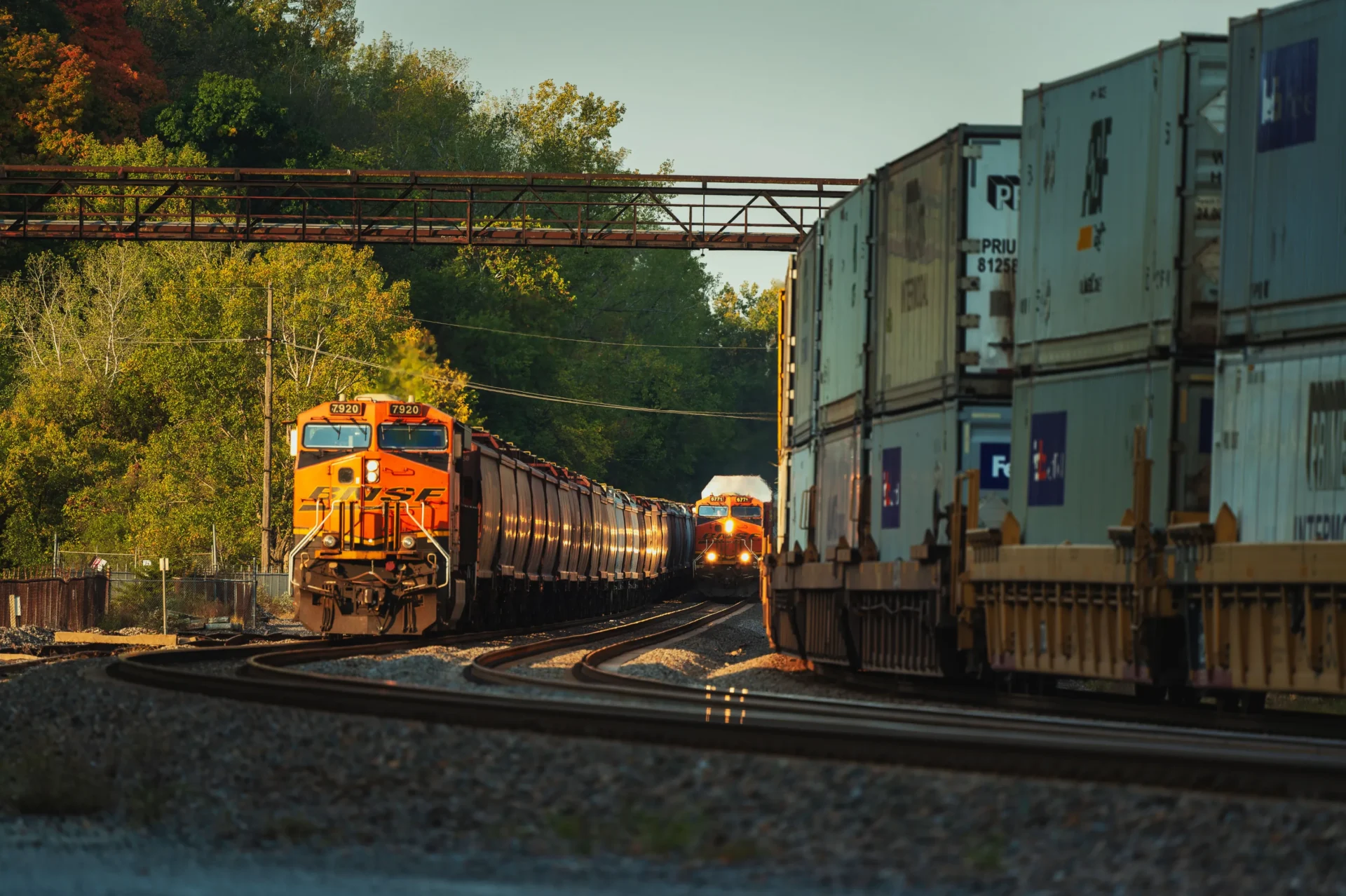
What is rail freight?
Rail freight is the transport of goods by train, usually in containers. Within Europe, rail transport is used for large volumes over longer distances, for example between ports and the hinterland. Internationally, it is primarily the rail transport between China and Europe As is well known, freight trains connect Chinese manufacturing cities with European hubs such as Duisburg, Rotterdam, and Antwerp. Transit time is usually between 15 and 20 days, depending on the route and traffic at border crossings.
Rail transport is rarely a stand-alone solution. Pre- and post-transport almost always takes place by road. This means that, in practice, rail freight is a form of multimodal transport, and the documentation must be accurate at every transfer point.
Customs Formalities for Rail Transport
Goods entering the EU by train from China are classified as non-EU goods. From the EU’s external border onward, they continue their journey under customs supervision. This requires a transit declaration Required: The goods are placed under the external transit procedure and travel with a T1 document to the customs clearance location. Only there is the import declaration filed, after which import duties and VAT are calculated, and the goods become freely tradable.
Rail freight also involves a CIM Waybill, the transport document for international rail transport. Together with the commercial invoice, packing list, and EORI number, this forms the basis for smooth processing. In practice, we often see delays caused by incomplete invoices or an incorrect commodity code. Even if the train is running on schedule, the container remains at the terminal.
Rail Freight Compared to Other Modes of Transport
| Modality | Speed | Cost | Typical deployment |
|---|---|---|---|
| Airfreight | Days | High | Urgent, high value |
| Rail Freight | 15–20 days (China–EU) | On average | Balancing Time and Budget |
| Sea freight | 30–40 days (China–EU) | Low | Large volumes, no time pressure |
| Road Freight | Flexible | On average | Within Europe, pre- and post-transport |
Rail transport is also more sustainable than air freight and road transport. For companies that want to reduce their CO2 emissions without having to deal with the long transit times of ocean freight, rail is therefore often a logical choice. Not sure which mode of transport to choose? Check out our page on air transport for weighing time-sensitive shipments.
What We Do in Rail Freight
We handle all customs-related aspects of your rail transport. Specifically, this means: preparing transit declarations in NCTS, handling the import declaration or export declaration, verification of the commodity code and customs value, and coordination with the terminal. With offices in Oud Gastel and Kallo, we work with both Dutch and Belgian customs authorities. This is an advantage for rail freight, as trains from China often pass through multiple EU member states before reaching their final destination.
Who is this service for?
Our rail freight services are ideal for importers and exporters who regularly transport goods by train, freight forwarders without their own customs department, and logistics service providers who wish to outsource their customs declarations. You can also count on us for a one-time shipment by rail. We operate independently: you retain control over your shipment, and we ensure that the customs formalities are handled correctly.
Need to arrange customs clearance for your rail freight?
With 26 years of experience in customs procedures, we ensure that your rail shipment doesn’t get held up by paperwork. Not sure about the right approach for your shipment? We’ll assess your specific situation. Contact us or request a quote.
Frequently Asked Questions About Rail Freight
How long does rail freight take from China to the Netherlands?
Transit time is usually between 15 and 20 days, depending on the city of departure, the route, and processing at border crossings. This makes the train about twice as fast as sea freight.
What documents do I need for rail transport?
The basic documents consist of a commercial invoice, a packing list, a CIM waybill, and an EORI number. For goods originating outside the EU, a T1 document is also required for transport under customs supervision, followed by an import declaration.
Do I have to pay import duties on rail freight from China?
Yes, for goods from outside the EU, you usually have to pay import duties and VAT upon import. The amount depends on the commodity code and the customs value of your shipment.
Is rail freight cheaper than air freight?
Yes, rail freight is, in most cases, significantly cheaper than air freight. On the other hand, transit times are longer. For shipments that aren’t under extreme time pressure, rail freight often offers the best balance.
Can I book a portion of a container for rail transport?
Yes, in addition to a full container load (FCL), a less-than-container load (LCL) is also an option. In that case, you share a container with other shippers. This is more cost-effective, but takes a little longer due to the consolidation and sorting of the cargo.
Other knowledge base articles
September 1, 2026
IOSS
IOSS stands for Import One Stop Shop: the VAT scheme for e-commerce shipments valued at up to €150 that originate from outside the ...

July 27, 2026
Clearing fees
Customs clearance fees are the fees you pay when a package from outside the EU enters the Netherlands. They consist of three ...

July 27, 2026
What is B2C e-commerce?
B2C e-commerce stands for business-to-consumer: as a company, you sell directly to individual customers through an online store or platform. Examples include ...