
What is multimodal transportation?
Multimodal transportation combines two or more modes-such as road, rail, sea or air-under one contract and with one responsible party.
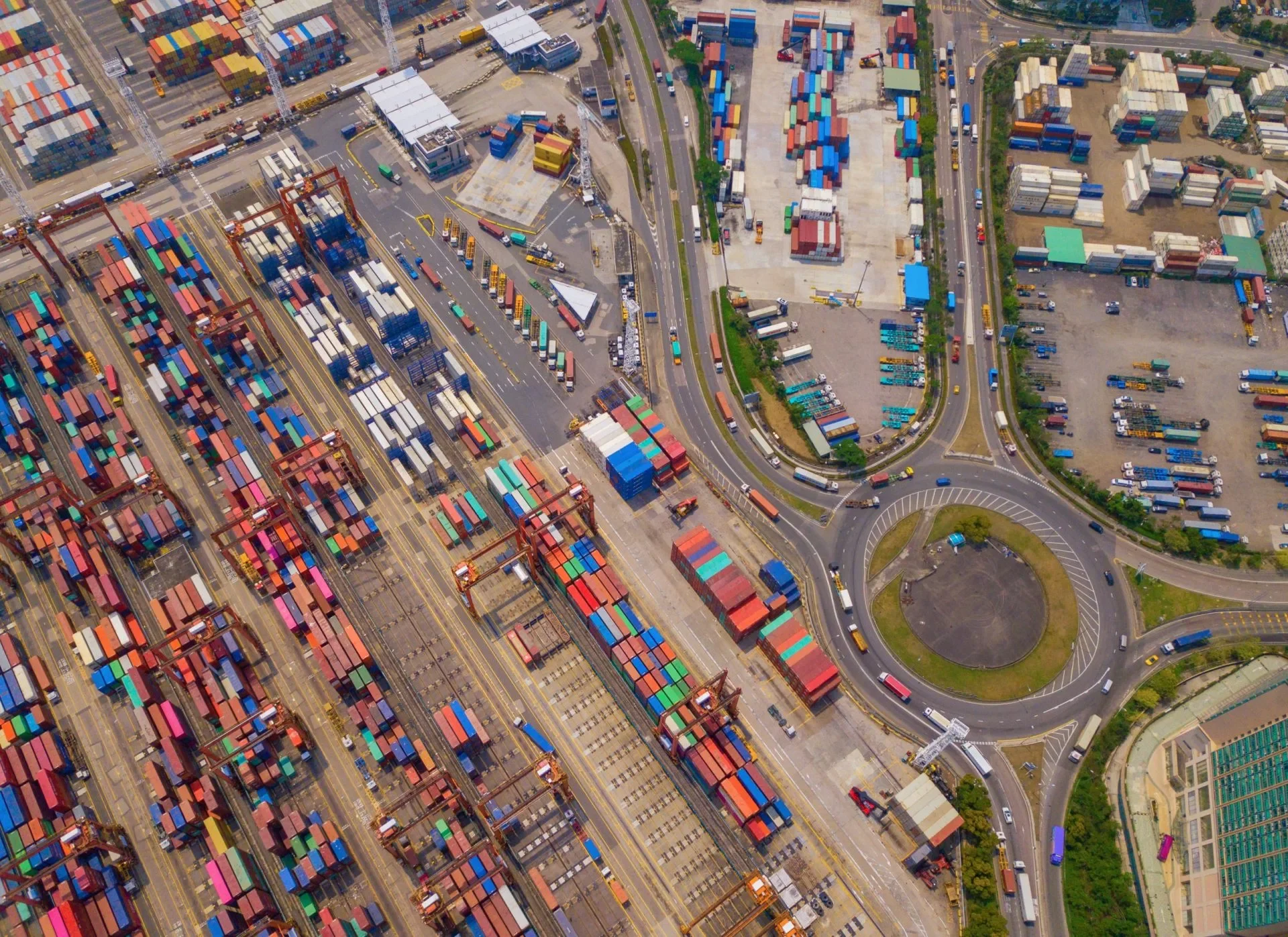
What is multimodal transportation?
As global trade continues to grow, so does the need for efficient and reliable transportation. Multimodal transportation has emerged as a solution to meet this demand. But what exactly is multimodal transportation and how does it work?
Multimodal transportation refers to the transportation of goods using two or more modes of transportation under a single contract. This mode of transportation combines the advantages of different transportation modes to provide efficient and cost-effective services to customers.
Multimodal transportation involves the use of different modes of transportation, such as road, rail, air and sea, to move goods from one place to another. This type of transportation is often used for long-distance transportation and international trade, where goods must be moved through different countries and across different borders. The multimodal transportation system offers several advantages, including lower transportation costs, greater reliability and faster transit times.
In summary, multimodal transportation is a crucial aspect of modern logistics and plays an essential role in facilitating global trade and commerce.
Benefits of multimodal transportation
There are many advantages to using multiple modes of transportation. One of the main advantages is that it provides greater flexibility and efficiency in transportation planning. With multimodal transportation, goods can be transported using the most efficient transportation mode for each leg of the journey, resulting in lower costs and shorter lead times.
In addition, multimodal transportation can help reduce congestion on roads and highways as more goods are transported via rail or waterways. The use of multiple modes of transportation can also improve the security and safety of goods in transit, as there is less risk of damage or theft while switching between modes.
In general, multimodal transportation provides a cost-effective and flexible solution for companies looking to transport their goods safely and efficiently over long distances.
Looking for support to make the right decision or want more information?
If so, please contact us. One of our specialists will be happy to help you further.
Examples of multimodal transportation
Examples of multimodal transportation include the use of trucks to transport goods from a factory to a port, from where they are loaded onto a ship and transported across the ocean to another port. From there, the cargo is loaded onto trains or trucks and transported to its final destination. Another example of multimodal transportation is the use of air and sea transportation, where goods are flown to a destination and then transported by ship to the final destination.
Multimodal transport vs. Intermodal transport
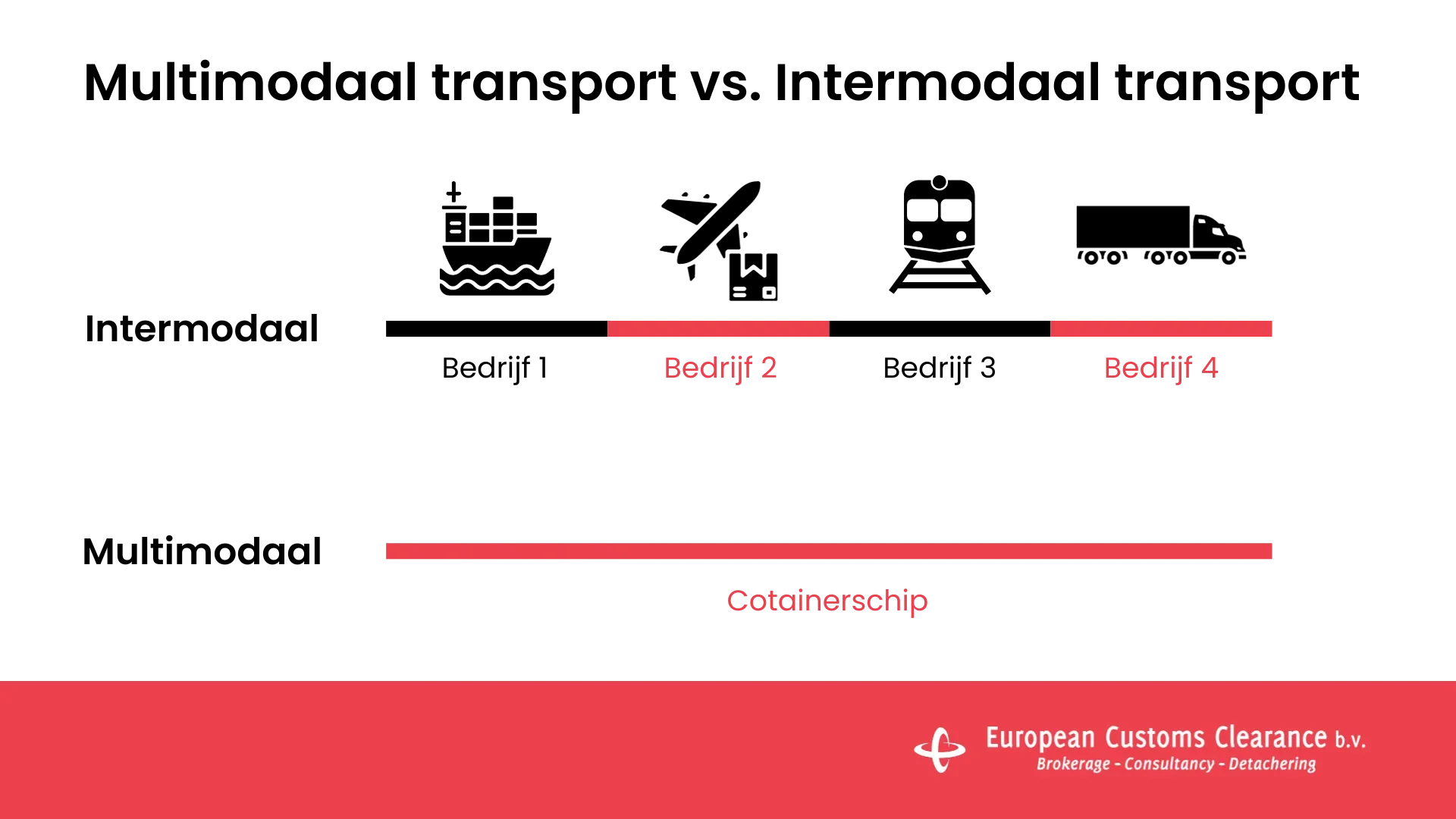
With multimodal transportation, the entire journey is covered by a single contract, with a single carrier taking overall responsibility and ensuring that the delivery is completed door-to-door, even if several carriers are involved along the way.
In contrast, in the case of intermodal transportation, a separate contract is entered into for each separate segment of the journey. This means that multiple entities are responsible for the successful delivery of the cargo during different stages of the journey.
Frequently asked questions about multimodal transportation
Which industries use multimodal transportation the most?
Industries such as logistics, shipping, automotive, chemical, and retail often use multimodal transportation because of the cost and efficiency benefits.
What is the role of multimodal transportation in sustainability?
Multimodal transportation can help reduce environmental impact by choosing more efficient routes and modes of transportation, resulting in lower greenhouse gas emissions and reduced traffic congestion.
What role does digitization play in multimodal transportation?
Digitization plays a crucial role in multimodal transportation by making it possible to plan, track and manage transportation processes more efficiently. This includes the use of advanced software, Internet of Things (IoT) devices and data analytics to collect and share real-time information about goods and transportation assets.
Other knowledge base articles
September 1, 2026
IOSS
IOSS stands for Import One Stop Shop: the VAT scheme for e-commerce shipments valued at up to €150 that originate from outside the ...

July 27, 2026
Clearing fees
Customs clearance fees are the fees you pay when a package from outside the EU enters the Netherlands. They consist of three ...

July 27, 2026
What is B2C e-commerce?
B2C e-commerce stands for business-to-consumer: as a company, you sell directly to individual customers through an online store or platform. Examples include ...