
Import duties
Are you importing goods from outside the European Union? Then you will have to deal directly with customs and tax authorities. This is because the price you pay to your supplier is rarely the final price. When entering the Netherlands or Belgium, import duties are calculated.
Many business owners feel these charges are an unexpected expense, but they are an integral part of international trade. Whether they are standard tariffs or politically driven measures (such as the much-discussed U.S. duties), knowledge of these costs is necessary to guard your margin. What exactly are import duties, how are they calculated and who bears the cost?
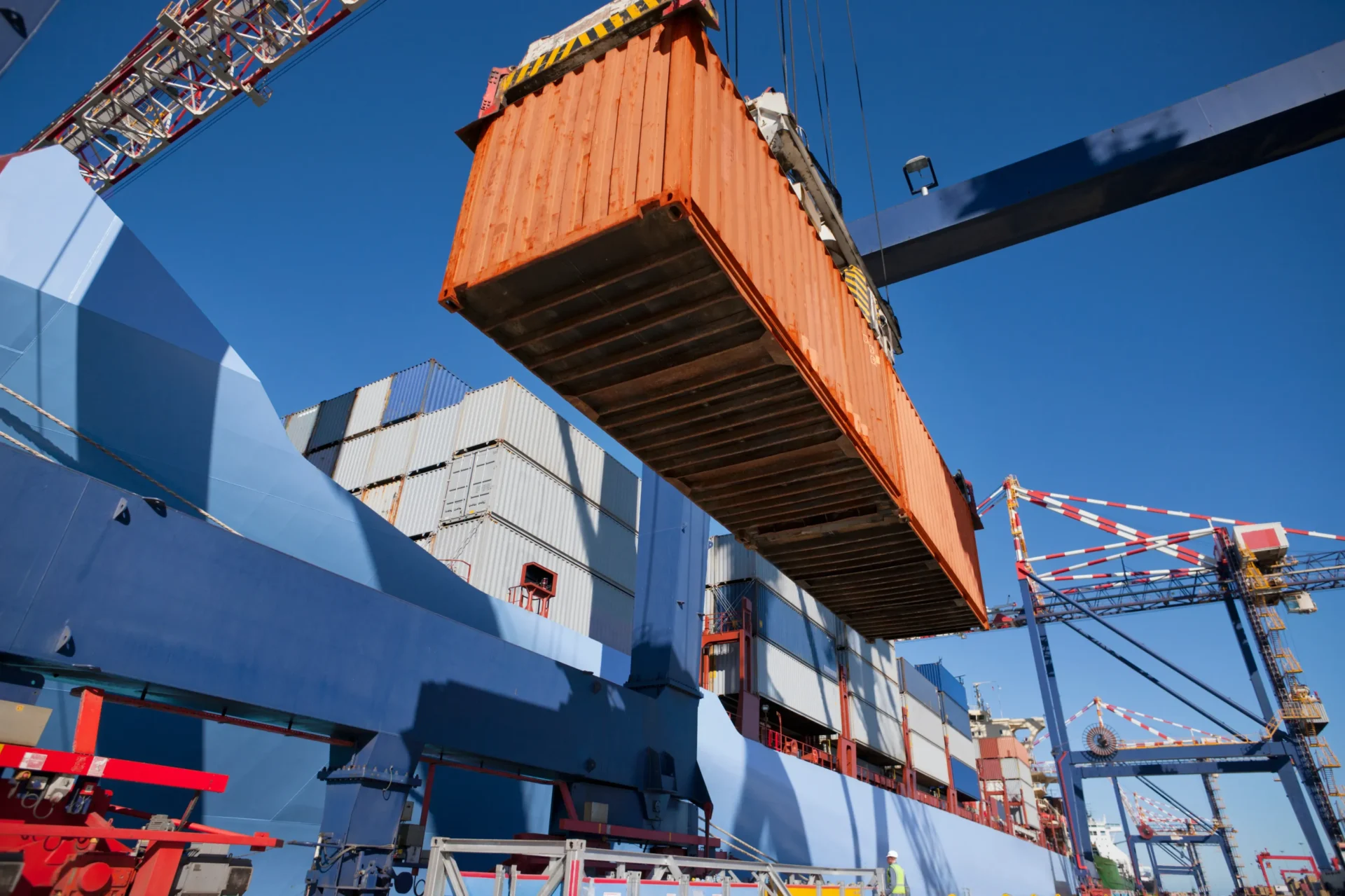
What exactly are import taxes?
The term ‘import tax’ is an umbrella term. It is not one specific tax, but a sum of various duties collected by customs at the border. The exact composition depends on the type of product and the country of origin. Usually the bill consists of a combination of:
- Import duties: This is the basic tax on goods from outside the EU. The percentage is determined by the commodity code (HS code) of your product. You can find more details on our page about import duties.
- Import VAT: You pay VAT (usually 21% in the Netherlands) on imported goods, just as you do on domestic purchases. The difference is that you pay it at the border, unless you article 23 have.
- Excise and consumption taxes: For specific goods such as alcohol, tobacco or certain oils, you pay additional taxes.
- Anti-dumping charges: These are extra-high levies on products dumped on the European market by countries (often China) at below-cost prices. These rates can be as high as 48% or more.
Why do import tariffs exist?
Governments do not levy these taxes just to replenish state coffers. There is often an economic or political purpose behind them. Basically, there are two main reasons:
- Protection of one's own market (Protectionism): Making foreign products more expensive makes it more attractive for consumers and businesses to buy homegrown (or within the EU) products.
- Trade policy leverage: Countries use tariffs to put pressure on each other. When country A raises tariffs, country B often responds with countermeasures.
The impact of trade measures
A well-known example of how import tariffs affect the economy is the actions of the United States. In 2025, President Trump announced, broad import tariffs. Although this sounds far away, the Dutch entrepreneur feels it directly. The Netherlands Bureau for Economic Policy Analysis (CPB) analyzed the effects of such measures in 2025. What will happen in practice?
- Trade diversion: As exporting to the U.S. becomes more expensive, companies are looking for other outlets. This may increase competition in the European market.
- Price increases: Ultimately, levies are often passed down the chain. Products become more expensive for the end user.
- Chain response: If the EU responds with counter-taxes, American products will also become more expensive in the Netherlands.
This shows that import tariffs are not static. The political winds help determine your purchase price.
How are import taxes calculated?
The basis for the calculation is the customs value. Many entrepreneurs think that duties are only on the purchase price, but this is not true. Customs calculates on the value of the goods when they arrive at the EU border (often the CIF value). The calculation sequence is as follows:
| Step | Description | Example calculation |
| 1. | Customs value determination | Invoice value (€10,000) + Transport & Insurance to EU border (€1,000) = € 11.000 |
| 2. | Calculate import duties | €11,000 × Rate (e.g., 6%) = € 660 |
| 3. | Determining VAT basis | Customs value (€11,000) + Import duty (€660) + Transport within EU (€200) = € 11.860 |
| 4. | Calculate VAT | €11,860 × 21% = € 2.490,60 |
| Total | Payable to customs | € 3.150,60 |
For proper handling, you always have the right customs documents needed, such as the commercial invoice and transport document. Without these documents, customs cannot determine the value and the shipment will be detained.
Who pays the bill?
Who pays the import duties depends on the agreements you have made with the supplier. These agreements are set out in the Incoterms.
- DDP (Delivered Duty Paid): The seller arranges everything and pays import duties and VAT. For the buyer, this is easy, but often you indirectly pay a higher price.
- EXW (Ex Works) or FOB (Free on Board): You as the buyer are responsible for the importation. You pay the customs agent and taxes upon arrival.
In most business import (B2B) cases, the importer in the destination country is responsible for payment. Ultimately, these costs are often passed on to the consumer.
Pay less? Pay attention to origin
Sometimes you can legally pay less or even 0% import duty. This is possible if the EU has a trade agreement with the country your goods come from (for example, the UK, Switzerland or Japan). To take advantage of this, you have to prove that the goods were actually produced there. You do this with a Certificate of Origin or a EUR.1 certificate. Without this document, you pay the standard rate even if there is a treaty.
Looking for support to make the right decision or want more information?
Mistakes with import taxes are expensive. If you use the wrong commodity code, you may overpay, or underpay, for years (with the potential for hefty fines and retrospective collections up to 3 years back).
Frequently asked questions about import taxes
When do I not have to pay import taxes?
Shipments with an intrinsic value of up to €150 are exempt from import duties (not VAT!). Personal gifts up to €45 are also often exempt. In addition, you can get 0% rate if you have a valid proof of origin from a treaty country.
Do I have to pay if I import from China?
Yes, imports from China are subject to standard import duties and VAT. Pay extra attention to specific products such as e-bikes, steel or solar panels; these may be subject to high anti-dumping duties.
Can I reclaim import taxes?
You cannot usually deduct import duties as input tax; these are direct costs. However, you can reclaim or set off the import VAT via your VAT return, provided you are an entrepreneur and entitled to a deduction.
Will Trump's levies affect my Dutch business?
Direct US levies apply to imports at USA. Do you export to America? Then your product becomes more expensive there. Do you import from the U.S.? Then European countermeasures can cause additional tariffs on American products. In addition, these trade wars affect the global price of raw materials
What happens if I don't pay the dues?
Customs does not release the goods. The logistics provider holds the shipment until the debt is paid. If payment is not made, the goods may be destroyed or sent back, with the costs borne by you.
Other knowledge base articles
March 19, 2026
CN code (Combined Nomenclature).
A CN code is the 8-digit commodity code used within the European Union for the classification of goods. This code ...
March 19, 2026
Article 23
When you import goods from outside the European Union, you immediately face import duties and VAT. By default, ...
March 19, 2026
Transport document
Every international transport involves a transport document. This document not only constitutes the contract between the shipper and the carrier, ...