
Article 23
When you import goods from outside the European Union, you immediately have to deal with import duties and VAT. By default, you have to pay this VAT the moment the goods cross the border. This has a big impact on your liquidity: you have to pre-finance 21% of the value and only get this back months later through the VAT return. To solve this liquidity disadvantage, the Dutch tax authorities offer the so-called “reverse charge mechanism on importation.” The legal basis for this lies in Article 23 of the Sales Tax Act 1968. With this authorization, you do not have to tick off the VAT at Customs, but declare it in your periodic VAT return.
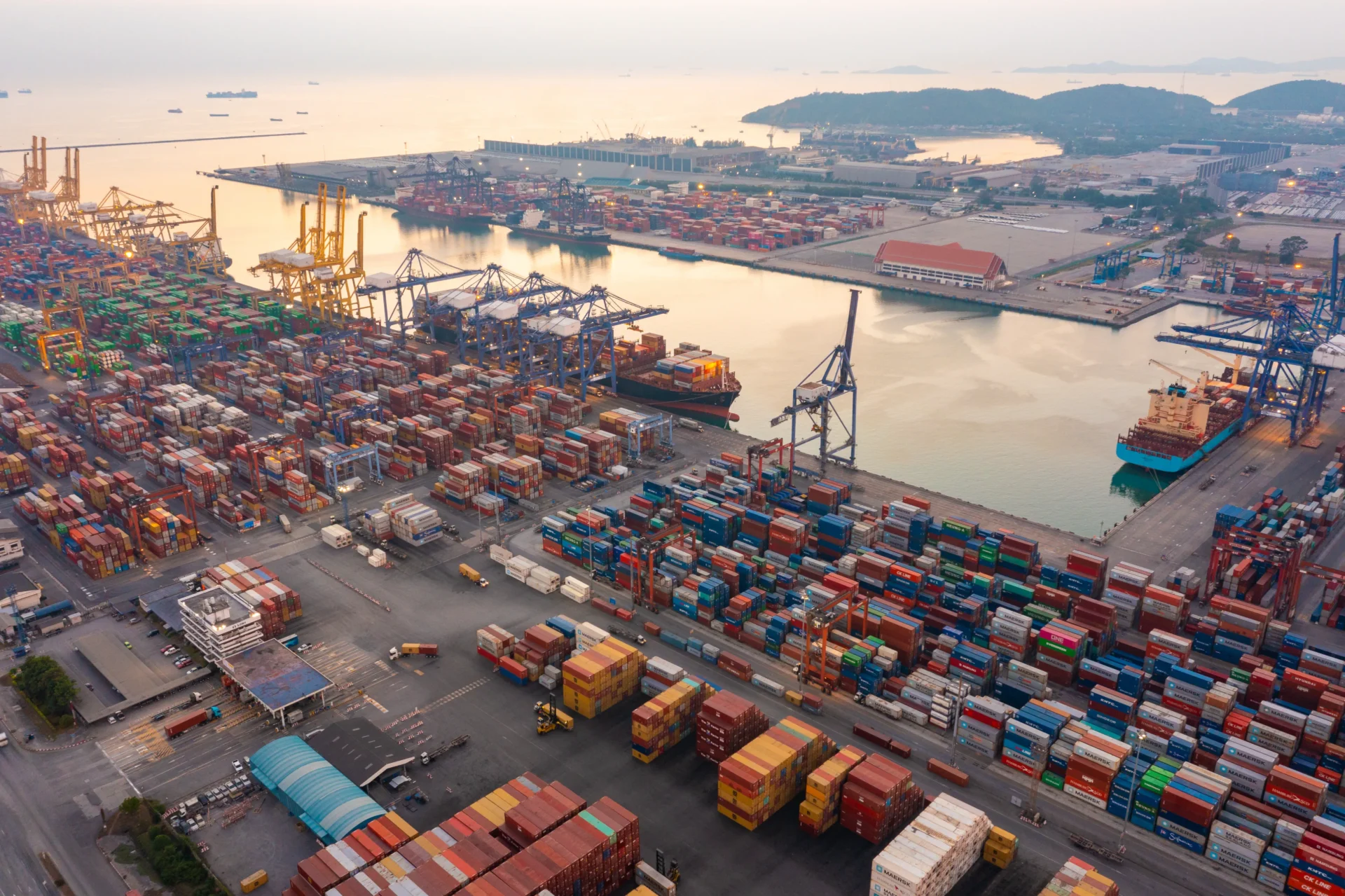
What is Article 23 of the Internal Revenue Code?
Article 23 is an article of law that allows the imposition of sales tax (VAT) on imports to be shifted to the periodic declaration. In logistics, we therefore simply refer to it as a “Section 23 permit.” Without this permit, you pay the import VAT directly to Customs during the import declaration. Do you have a license? Then you do not report the VAT due until your next VAT return. In that same return, you immediately deduct this amount as input tax. So on balance you pay nothing and do not have to advance large amounts.
Calculation example liquidity advantage
The table below shows the concrete difference to your cash flow for a €10,000 import shipment.
| Situation | Without Article 23 | With Article 23 |
| Invoice Value | €10.000 | €10.000 |
| Import VAT (21%) | €2,100 (pay directly to border) | €0 (shifted to declaration) |
| Recovery | Via VAT return (after 1-3 months) | Settled directly in tax return |
| Impact on cash flow | - €2.100 (temporarily lost) | €0 (no pre-financing) |
Conditions of the permit
The Inland Revenue does not automatically issue this permit. As an entrepreneur, you must prove that your business is based in the Netherlands. Foreign entrepreneurs usually do not qualify directly and rely on tax representation. In addition, you must demonstrate that you regularly import goods from non-EU countries. Licenses are often not issued for occasional shipments. Also, your records must be in order. The tax authorities require that your administration is set up in such a way that it is easy to see how much VAT you owe on imports. Starting entrepreneurs can also apply for the permit, but must make a plausible case that they will soon be importing on a regular basis.
How does the diversion work in practice?
Applying the permit requires coordination between you, your customs representative and your accountant. When we receive the customs documents we indicate in the system that you have an Article 23 permit. At that time, no VAT is charged by Customs. You then enter the value of the imported goods and the VAT due in section 4a of the VAT declaration (“Supplies/services from countries outside the EU”). You enter the same amount in section 5b (“Input tax”). It is important that the administration of the customs declarations match exactly with your VAT declaration, as the tax authorities carry out checks on this.
Article 23 applications
You apply for the permit in writing to the Internal Revenue Service. This can be done using the form Application for Permit Article 23 on their website. Please allow an average processing time of 8 weeks at the time of writing. As long as the permit has not yet been granted, you must pay the VAT on import as usual. You cannot correct this retroactively. So make sure you start the application in time if you have import plans.
No Section 23 permit? (Fiscal representation)
Not every business qualifies for its own license. This often applies to foreign companies or entrepreneurs who do not yet meet the frequency requirement. In these cases, Limited Fiscal Representation (BFV). a godsend. Here, a logistics service provider acts as a fiscal representative and uses its own license for your goods. You can read more about this in our article on the requirements for customs representation.
Please note that European Customs Clearance does not currently offer fiscal representation for imports into the Netherlands. Are you importing via Belgium? There we do offer this service in certain cases.
Looking for support to make the right decision or want more information?
At European Customs Clearance, we always check in advance that you have a valid Article 23 permit before we file the declaration. We link your permit to the declaration so that you do not pay VAT at the border.
Do you have questions about your current status or want to switch to reverse engineering? Contact us for an analysis of your situation.
Frequently asked questions about Article 23
Can I apply for the Article 23 permit retroactively?
No, the permit only applies from the date stated in the Tax Office's decision. You can reclaim VAT paid at Customs before that date only through the regular VAT return.
Is Article 23 the same as the reverse charge on services?
No. Although the mechanism (declaring VAT instead of paying it) is similar, Article 23 is specifically for imports of goods from non-EU countries.
Is my Dutch Article 23 permit also valid in Belgium?
No, this is a national regulation. Belgium does have a similar system (ET 14,000 permit), but your Dutch permit is not valid there.
Do I have to pay for an Article 23 application?
The application to the Internal Revenue Service is free of charge. However, setting up the records may require time or consulting fees from your accountant.
What happens if I stop importing?
If you do not use the permit for an extended period of time, the tax authorities can revoke it. You will then have to pay the VAT again directly at the border the next time you import.
Other knowledge base articles

March 19, 2026
Import duties
Are you importing goods from outside the European Union? Then you will have to deal directly with customs and tax authorities. ...
March 19, 2026
CN code (Combined Nomenclature).
A CN code is the 8-digit commodity code used within the European Union for the classification of goods. This code ...

March 19, 2026
Transport document
Every international transport involves a transport document. This document not only constitutes the contract between the shipper and the carrier, ...